
Sound Design Principle: Information
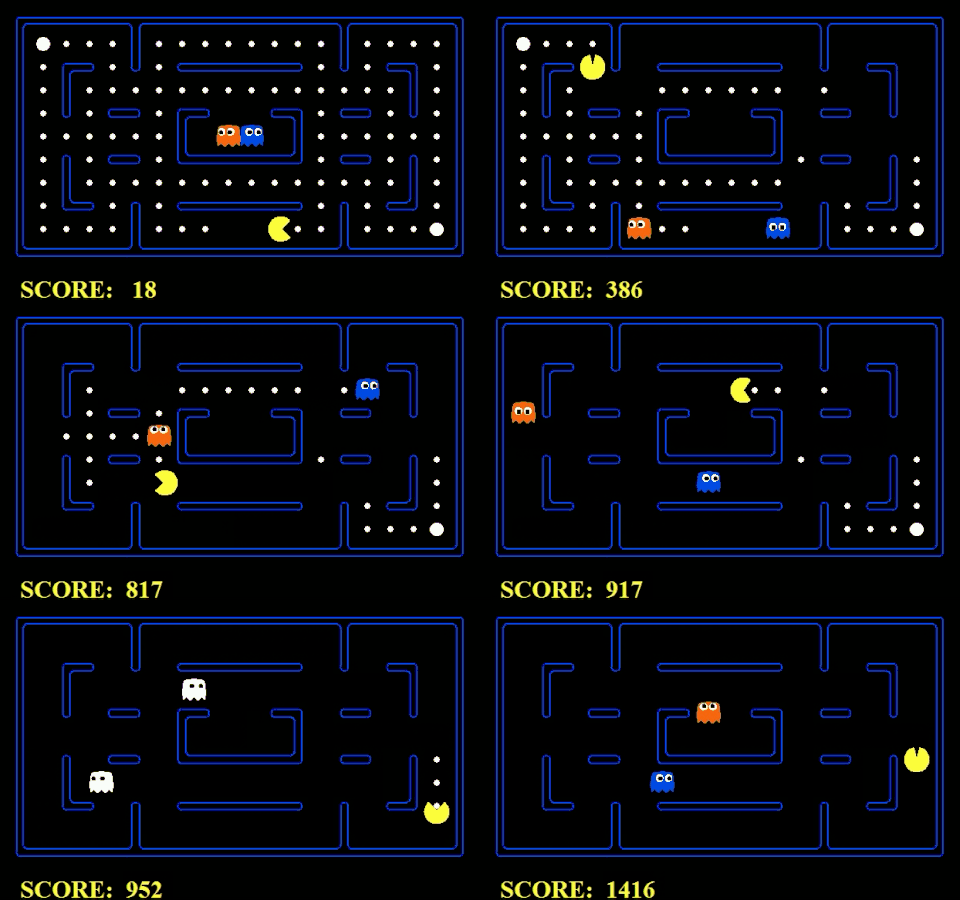
One of the main responsibilities of sound design in the video games world is information.
Sinclair (2020) notes that information can be summarised is a very simple equation: “Data + Context = Information”.
For example, a basic arcade game with limited lives can communicate to the player that they are close to a game over by switching to a rapid up-tempo backtracking similar to that of a heartbeat. As a result, the music provides the user with helpful feedback as to what is happening in the game in terms of the life mechanic. Aside from lives or a threatening game over, there are many other ways sound can be used to convey information.
Geometry/Environment
- Is the environment indoors or outdoors?
- What is the size of the room?
- What structures are there?
- Can we see the source of the sound? Partially see it?
Distance: energy from reverb signals decay slower than dry signals. Therefore:
- Reverb
- The further away, the more reverb
- The closer, the dryer
- Air absorption: temperature, humidity and distance
- The higher it is, the more it sounds like a low pass filter makes it sound like it’s through a wall; further away
Location
- Interaural time difference (ITD): the time difference between one ear to the other
- Interaural intensity difference (IID) or interaural level difference (ILD): difference in amplitude in the left and right ear
- The precedence effect: Direction of the source of sound in a closed space
User Feedback and Game Mechanics
- The “Chime Vs Buzzer Principle”: A chime notes whether a task or quest has been completed or not. A universal sound—associated with a positive sentiment A buzzer is noisy and is often a negatively viewed, maybe a task that has failed.
- Audio mixing: the balance between music, dialogue and sound effects can attract the attention of the user and allows it to focus on a specific aspect of the game.